Nigeria’s First Policy, Throwback Lessons from the Past
Successive administrations across Africa—including Nigeria, over decades, have introduced Buy Local frameworks to stimulate domestic industry, creating jobs, and conserving foreign exchange. The purpose was clear: leverage government procurement as a powerful industrial policy tool. Yet, in most cases, those goals were not achieved due to weak enforcement, low industrial capacity, and inconsistent political will, write Editor Gentechnews, Tony Nwakaegho.
Nigerian government recently introduced Nigeria’s First Policy, which has gained momentum in policy discourse, stakeholders’ advocacy, and government signaling the way forward that could have altered behaviour in public procurement at scale.
However, experts have mulled that if formalised and backed with legislation, it could provide the enabling framework for Nigeria’s manufacturers to benefit from increased government demand.
The Manufacturers Association of Nigeria (MAN) 53rd Annual General Meeting (AGM) is gathering momentum, hence the association which has placed the localisation agenda at the heart of its advocacy has themed its AGM: “Nigeria First: Prioritising Made-in-Nigeria” with a view to to rallying stakeholders around practical steps to ensure that the policy moves from intention to implementation.
However, PAMA has welcomed this renewed momentum, recognising its alignment with broader continental objectives under the African Continental Free Trade Area (AfCFTA) and citing the United States, India, and China, government-led procurement policies to have historically strengthened domestic industries, enhanced competitiveness, and reduced dependence on imports.
It was gathered from Africa’s past experiences that similar Buy-Local efforts in other African countries have not always succeeded as South Africa, Kenya, and Ethiopia, among others, pursued localisation with the right purpose, but fell short of expectations due to: Lack of legal backing and weak enforcement mechanisms; Policy reversals with changes in administration; Insufficient industrial capacity to meet procurement needs; Corruption and loopholes that compromised integrity.
Nigeria must learn from these experiences to avoid repeating past mistakes.
There is a need for Nigeria First Policy to be done differently in order to set a new benchmark for Africa by following these critical steps:
“Formalisation – the policy must be gazette and legislated to guarantee continuity; Enforcement – MDAs should be held accountable through transparent compliance mechanisms; Capacity Development – local manufacturers need reliable access to finance, energy, and technology; Standards and Certification – ensuring quality will build trust in Nigerian-made goods; Procurement Transparency – digital monitoring systems can prevent abuse and strengthen accountability.”
Nigeria First Policy if properly implemented could emerge as a continental model for industrial sovereignty under AfCFTA, demonstrating how government procurement can be harnessed to unlock
value, create jobs, and foster stronger regional supply chains.
PAMA has affirmed that it will continue to monitor developments in Nigeria and support efforts to translate this policy intent into an effective framework that strengthens African manufacturing.
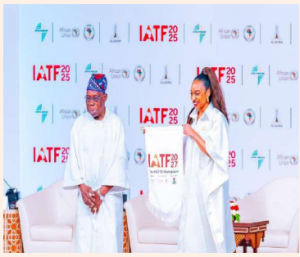
In a related development, PAMA has extended its warm congratulations to the Federal Republic of Nigeria on being named the official host of the Intra-African Trade Fair (IATF) 2027 at the IATF2025, noting that this momentous development represents a recognition of Nigeria’s strategic role in Africa’s economic landscape.
“It is a historic opportunity for Nigeria to showcase the collective strength of African manufacturing and trade under the framework of the African Continental Free Trade Area (AfCFTA),” PAMA added.
PHOTO NEWS