
FG suspends enforcement of NAFDAC sachet alcohol ban
- SERAP drags government to court over suspension of enforcement
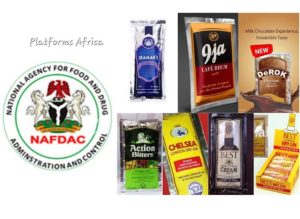
The Federal Government (FG) in response to growing concerns from industry stakeholders, has ordered an immediate suspension of enforcement actions on the proposed sachet alcohol ban by the National Agency for Food and Drug Administration and Control (NAFDAC), pending consultations and a final policy decision.
The directive was issued by the Office of the Secretary to the Government of the Federation (OSGF) following the receipt of an official correspondence from the House of Representatives Committee on Food and Drugs Administration and Control.
According to a statement released on Monday, the correspondence, dated November 13, 2025, and signed by the committee’s Deputy Chairman, Hon. Uchenna Harris Okonkwo, drew attention to existing National Assembly resolutions concerning the proposed sachet alcohol ban.
The OSGF said the matter is currently under review in line with its statutory coordinating role as Chairman of the Cabinet Secretariat. As a result, all agencies have been directed to halt any enforcement or related decisions until consultations are concluded and a final position is formally issued.
“For the avoidance of doubt, any action or enforcement undertaken by NAFDAC or any other agency on this matter without due clearance and resolution by the Office of the Secretary to the Government of the Federation is of no effect and should be disregarded by the public,” the statement said.
The Federal Government assured Nigerians that legislative resolutions, economic implications, public health concerns, and broader national interest considerations are being carefully examined to arrive at a balanced and lawful outcome.
The OSGF added that the public would be duly informed once a final decision has been reached.
The statement was signed by Mr. Terrence Kuanum, Special Adviser on Public Affairs to the Secretary to the Government of the Federation, and dated December 15, 2025.
It will be recalled in this context that the road to the proposed sachet alcohol ban itself began quietly but deliberately years ago, rooted in growing public health anxieties over the unchecked spread of ultra-cheap alcohol sold in small sachets and PET bottles, which regulators said had become widely accessible to minors and vulnerable groups. The National Agency for Food and Drug Administration and Control first signaled its intentions through stakeholder engagements and policy pronouncements that framed sachet alcohol as a contributor to alcohol abuse, road accidents, domestic violence and long-term health risks.
What followed were phased timelines, repeated warnings to manufacturers and distributors, and a series of postponed deadlines meant to allow industry players adjust, even as resistance mounted from labour unions, traders and manufacturers who warned of job losses and economic dislocation. By the time the enforcement date drew near, the issue had grown beyond a regulatory action into a national debate, pitting public health concerns against economic realities, setting the stage for the political and legislative intervention that has now forced a pause on the ban’s implementation.
In a related development, the Socio-Economic Rights and Accountability Project (SERAP) has asked the Federal High Court in Lagos to issue injunctive orders restraining the Federal Ministry of Health and Social Welfare and the Attorney-General of the Federation who represents the Federal Government, including the Office of the Secretary to the Government of the Federation (SGF), from further extending the moratorium on the prohibition of the production, distribution, and sale of alcohol in sachet format, and from interfering with the statutory powers of the National Agency for Food and Drug Administration and Control (NAFDAC) to enforce the ban.
Specifically, SERAP is seeking an order of injunction restraining the defendants, their servants, agents, privies, and all persons or authorities acting through them from extending any moratorium on the sachet alcohol ban.
The organisation is also asking the court for a perpetual injunction restraining the defendants from directing, preventing, blocking, or stopping NAFDAC from enforcing the prohibition, in line with its statutory functions under Sections 5 and 30(c) of the NAFDAC Act, the Spirits Drink Regulation, and the Memorandum of Resolution executed on 19 December 2018.
In the suit marked FHC/L/CS/2568/25, SERAP is asking the court to compel the Federal Ministry of Health and Social Welfare, through its supervisory authority, to immediately ensure that NAFDAC fully enforces the existing nationwide ban on the production, distribution, and sale of alcohol in sachet format.
The defendants in the case are the Minister of Health and Social Welfare and the Attorney-General of the Federation.
The civil rights group argues that the continued delay by the relevant federal authorities in enforcing the ban amounts to a failure to implement long-standing public health regulations designed to curb alcohol abuse, protect public safety, and safeguard citizens’ well-being.
The suit was filed on SERAP’s behalf by Mofesomo Tayo-Oyetibo, SAN, alongside a team of lawyers from Tayo Oyetibo LP.
In an originating summons dated 15 December 2025, SERAP contends that the ongoing circulation of sachet alcohol violates the National Health Act, 2014, the NAFDAC Act, the Spirits Drink Regulation, 2021, and the Memorandum of Resolution of 19 December 2018, which collectively mandate a nationwide ban on sachet alcohol.
SERAP is asking the court to determine whether the Minister of Health can lawfully refuse or fail to enforce the prohibition, and whether any federal authority has the power to interfere with or delay NAFDAC’s statutory duty to enforce the ban.
The organisation also wants the court to decide whether, given the acknowledged dangers of alcohol abuse, judicial intervention is required in the interest of public health, public safety, and public order.
According to SERAP, sachet alcohol, often cheap, highly potent, and widely accessible, has been linked to rising cases of alcohol abuse, particularly among young people and low-income communities. It argues that the 2018 Memorandum of Resolution and subsequent regulations were adopted precisely to address these risks.
Among the reliefs sought are declarations that the sachet alcohol ban is a valid regulation under the NAFDAC Act; that the Minister of Health has no legal authority to grant or extend any moratorium on its enforcement; and that it is unlawful for any federal authority to interfere with NAFDAC’s enforcement responsibilities.
SERAP is also asking the court to affirm that the defendants have a duty to ensure the full implementation of the ban nationwide.
The legal action follows recent unverified social media news suggesting that there is an attempt to further postpone the long overdue enforcement of the ban championed by a few *operators* bent on continued violation of the regulation, despite earlier regulatory directive and broad industry commitments.
The issue has gained renewed attention after the Senate in a full plenary session passed a unanimous resolution setting a December 2025 deadline for full enforcement of the ban, citing public health concerns.
SERAP insists that continued delays undermine Nigeria’s health laws and expose citizens to preventable harm, urging the relevant authorities to prioritise public interest over selfish profit objectives of a few non-compliant businessmen.
The court is expected to fix a hearing date in a few days’ time.