
SWAN Seeks Media Support to Combat Illicit Alcohol Trade In Nigeria
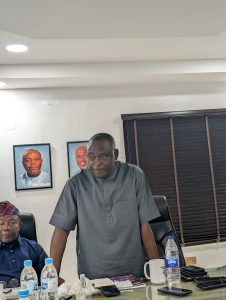
A plea has come from the Director‑General of the Spirits and Wines Association of Nigeria (SWAN), Tony Okwoju, soliciting the help of the media to play a robust role in fighting the illicit alcohol trade by exposing fake products as well as raising public awareness.
Okwoju who was speaking at the Brand Journalists Association of Nigeria’s (BJAN) monthly breakfast roundtable in Lagos on 27 March 2026, called on the the media to support the industry through responsible reporting that highlights the health and economic dangers of counterfeit spirits.
DG SWAN cited a Deloitte report estimating that Nigeria loses about ₦472 billion yearly to the illicit‑alcohol trade, equivalent to roughly 40 percent of the total market.
He disclosed that many counterfeiters are now using methanol, which is a toxic industrial alcohol to cut costs,thereby posing severe risks such as blindness, organ failure, and even death.
“These counterfeiters are not just faking brands, they are killing people,” he added.
SWAN, he said has adopted measures to curb the problem, such as intensively collecting and recycling used bottles from bars and nightclubs so that they cannot be refilled with fake liquor.
Accordingly, the DG SWAN announced a one‑day stakeholders’ workshop on 22 April 2026, aimed to converge regulators, enforcement agencies, and industry players to develop a coordinated response to the surge in fake alcohol in the country.
BJAN Chairman, Daniel Obi hailed the partnership, describing the meeting as a bold step toward greater collaboration between the media and the beverage industry.
Obi emphasized that responsible reporting can increase public perception, boost industry standards, and support national development by magnifying accurate, safety‑oriented narratives around alcohol consumption.
The Manufacturers Association of Nigeria (MAN) has expressed confidence in the partnership project driven by the United Nations Industrial Development Organization (UNIDO), in partnership with the Global Environment Facility (GEF).
MAN commended the project implementation when it met with other key stakeholders from Nigeria’s industrial and financial sectors in Abuja to present the outcomes of the financing component of the GEF–UNIDO Industrial Energy Efficiency (IEE) and Resource Efficient and Cleaner Production (RECP) Project.
In his opening remarks, the Director-General of MAN and Chairman of the Investment Committee, Segun Ajayi-Kadir, mni hinted that the project commenced in 2022, with the Bank of Industry (BoI) serving as a key partner.
Ajayi-Kadir affirmed that the collaboration has since deepened, with several industries already benefiting from the initiative.
The UNIDO National Programme Officer, Ruben Bamidele, said the project’s design is aimed at promoting industrial energy and resource efficiency.
Bamidele avered that conventional financial institutions are often reluctant to fund high-risk investments, which underscores the importance of the partnership with the Bank of Industry.
According to the UNIDO National Programme Officer, “Traditional bank lending typically does not support high-risk investments. This is why the GEF has provided support for implementing this scheme through the Bank of Industry to encourage investors to participate in this critical area of industrial development.”
He declared that the forum provided an opportunity to update stakeholders on the project’s progress, achievements, emerging opportunities, challenges encountered, and recommendations for the future.
The event included presentations on key results recorded during the implementation of the project, mostly in advancing Industrial Energy Efficiency (IEE) and Resource Efficient and Cleaner Production (RECP) among participating enterprises.It also served as an occasion for engagement with national stakeholders and financial institutions, with discussions based on lessons learnt as well as the programme’s impact on promoting sustainable industrial practices in Nigeria.
Participants at the event which were drawn from government agencies, financial institutions, and the private sector, brainstormed on strategies to reinforce financing mechanisms, scale up the adoption of energy-efficient solutions across industries, as well as outline future interventions, while sustaining the gains achieved through the project.