
Drug-Free Nigeria Begins With Responsible Reporting, NOMA Tells Journalists
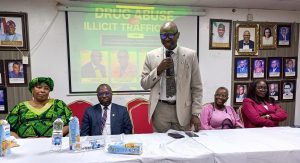
The Nigerian Online Media Alliance (NOMA) held a capacity-building workshop themed “Responsible Media, Drug-Free Nigeria,” for journalists at the Federal Neuro-Psychiatric Hospital, Yaba, Lagos, on June 25, 2026 focusing on prevention and advocacy.
The event themed “Responsible Media, Drug-Free Nigeria,” preceded the global observance of the United Nations International Day Against Drug Abuse helped to equip media practitioners with tools for ethical reporting, addiction prevention, and reducing the stigmatization of substance abuse.
The event organized by the Nigerian Online Media Alliance (NOMA) with the National Drug Law Enforcement Agency (NDLEA) and the International Society of Substance Use Prevention Professionals (ISSUP) is to commemorate the International Day Against Drug Abuse and aimed to equip media professionals with ethical reporting tools with key discussions centered on evidence-based prevention communication, stigma reduction, and reducing the alarming rate of drug abuse in Nigeria.
During the workshop, leading mental health and addiction experts highlighted the severity of the crisis in Lagos and across the country:
Dr. Olugbenga Owoeye Medical Director/CEO, Federal Neuro-Psychiatric Hospital, Yaba, Lagos, as the chief host and keynote speaker, stressed that drug dependence is a health condition rather than a moral failing.
He urged journalists to use their platforms to correct public misconceptions, reduce the stigma that deters people from seeking help, and amplify effective prevention and treatment pathways.
He explained that an estimated 14.3 million Nigerians aged 15-64 use drugs, adding that this prevalence rate is nearly triple the global average.
He hinted that between 40% and 65% of all admissions at the Federal Neuro-Psychiatric Hospital, Yaba are for drug-related conditions, with youth disproportionately affected.
Dr. Olajumoke Koyejo President, International Society of Substance Use Prevention and Treatment Professionals (ISSUP) Nigeria Chapter in her address highlighted the gap in addiction treatment while providing practical insights on evidence-based public health communication.
She tasked media practitioners with focusing on behavioural change communication and utilizing specialized screening as well as referral knowledge to advocate for healthier communities.
The representative from the Ministry of Youth and Social Development, Dr. Kotun in his speech emphasized the critical role of journalists in curbing substance abuse.
Dr. Kotun highlighted the Lagos state’s ongoing anti-drug sensitization initiatives.
Speaking on prevention and advocacy, he harped on responsible journalism and charged the media with moving beyond mere information channels to become advocates for social transformation.
He explained that for stigma reduction, the media practitioners should ensure that reporting on drug-related issues is evidence-based and free from stigma
Additionally, he urged journalists to focus on treatment and recovery pathways to help build safer, healthier communities
The Chairman National Drug Law Enforcement Agency (NDLEA), Brig. Gen. Mohamed Buba Marwa (Rtd) representative, Mrs Rita Geh delivered a powerful address emphasizing the media’s vital role in halting the spread of substance abuse and destigmatizing addiction treatment.
The NDLEA Chairman praised NOMA for centering the workshop on the theme: “Responsible Media, Drug-Free Nigeria: The Journalist’s Role in Prevention and Advocacy.”
He stated that the drug war cannot be won alone by enforcement, hence the need for prevention and advocacy and urged journalists to avoid glamorizing drug use and focus instead on facts, family impact, and recovery.
He disclosed that the NDELA has arrested about 77859 drug suspects, secured 14, 122 convictions, seized over 15 million substances and destroyed many plantations of cannabis across the country, among other achievements.
She emphasized that the agency reinforced the necessity of prevention reporting by citing the National Drug Control Master Plan.
According to the NDELA boss, with Nigeria’s drug use prevalence standing at 14.4%, the media’s educational campaigns serve as frontline defense for vulnerable youth.
The NDLEA reiterated the importance of public awareness regarding treatment while highlighting its War Against Drug Abuse (WADA) initiative
He reminded journalists to publicize the NDLEA 24/7 toll-free helpline, adding that this service offers free, confidential psychosocial support and addiction counseling for those in need.
A journalist and media trainer, Joke Kujenya in her speech emphasized that journalists hold a critical duty as societal gatekeepers to end the stigma surrounding mental health and drug abuse through balanced, evidence-based reporting.
Kujenya urged reporters to intentionally shift their language and narrative frameworks when covering addiction and psychological disorders, replacing stigmatizing terminology with empathetic and accurate realities of prevention and recovery.
She highlighted that journalist function as a vital bridge between health institutions—like the Federal Neuro-Psychiatric Hospital, Yaba—and the public, empowering communities through preventive journalism and clear awareness campaigns.
Kujenya reinforced the need for accurate, balanced, and data-backed reportage, noting that the media’s influence directly impacts governmental policy and public behavioral change.
Earlier in her opening address, Theresa Moses, Chairperson, Nigerian Online Media Alliance (NOMA) stated that media professionals hold a unique position in shaping public perception, adding that the workshop was organized to commemorate the International Day Against Drug Abuse and Illicit Trafficking.
She stressed that responsible reporting is vital to fighting the drug epidemic and removing the societal stigma surrounding addiction recovery and securing a drug-free Nigeria.
The NOMA Chairperson explained that the workshop focused on the theme, “Responsible Media, Drug-Free Nigeria: The Journalist’s Role in Prevention and Advocacy,” is aimed at bringing together experts in public health, mental health advocacy, and NDLEA to equip bloggers, publishers, and correspondents with fact-based storytelling tools.
At the Nigerian Online Media Alliance (NOMA) capacity-building workshop for journalists held today at the Federal Neuro-Psychiatric Hospital, Yaba, Lagos the Federal Road Safety Corps (FRSC) and the Nigeria Security and Civil Defence Corps (NSCDC) delivered goodwill messages emphasizing the critical need for collaborative advocacy and responsible reporting to curb substance abuse and save lives.
The FRSC highlighted the direct correlation between substance abuse and road traffic crashes and urged media practitioners to use their platforms to intensify campaigns against drug-impaired driving, reminding journalists of the 122 emergency toll-free line for reporting crashes.
The NSCDC applauded the Nigerian Online Media Alliance (NOMA) for focusing on prevention and advocacy and urged journalists to continue partnering with security agencies by disseminating accurate, evidence-based information that promotes national security and positive behavioral change.
The event encouraged journalists and publishers to use strategic storytelling, avoid glamorizing substance use, and promote ISSUP’s evidence-based addiction prevention and recovery pathways.