
ALTON pays NCC Board Chairman Inaugural Visit, Seeks Stronger Regulatory Independence, Others.
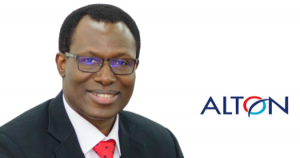
The Association of Licensed Telecommunications Operators of Nigeria (ALTON) has alluded to the full confidence the telecom Industry reposes in the new Nigerian Communications Commission (NCC) Board Chairman’s leadership while calling for urgent action on regulatory independence, harmonized taxation, and protection of critical infrastructure to secure long‑term sector stability and growth.
The ALTON Chairman, Engr Gbenga Adebayo, delivered the congratulatory and call for action messages when the led a delegation of Senior Executives of member telecom companies on a courtesy visit to the Chairman of the Board of the Nigerian Communications Commission, Mr. Idris Ibikunle Olorunimbe.
Speaking on behalf of the telecommunications industry, ALTON Chairman, Engr Gbenga Adebayo said Dr. Olorunnimbe’s appointment comes at a defining moment for the sector— a time of recovery, recalibration, and renewed investor confidence.
He acknowledged that Chairman of the Board of Commissioners distinguished professional journey, record of reform-oriented leadership, administrative discipline, and history of delivering results in complex institutions give the telcos the great confidence that this Board is in capable hands.
“We are truly delighted by your appointment and confident that under your stewardship, this Board will not only meet the expectations of Mr. President, but indeed surpass them,” he said.
ALTON also commended the Executive Vice Chairman of NCC, Dr. Aminu Maida, and the Executive Commissioners for resolving the long-standing Unstructured Supplementary Service Data (USSD) debt crisis, which had grown to nearly ₦300 billion over four years and posed systemic risks to both the telecom and digital financial services ecosystems.
“Today, there is no outstanding USSD debt. The ecosystem has fully migrated to end-user billing. What was once a looming crisis has been converted into a sustainable framework.
“We are immensely grateful. Kindly help us convey our deep appreciation to him — because without that intervention, this would have been a major challenge awaiting you upon assumption of office,” Adebayo added.
He recalled that for thirteen years, the industry maintained static pricing despite rising inflation, currency volatility, aging infrastructure, and escalating energy costs, adding that the tariffs fell significantly below cost; Investment slowed; Networks became strained; while the sector was approaching a stage where service rationing was becoming a real possibility.
He mentioned that the Association made evidence-based representations to the Government and the approval was granted last year for cost-reflective tariff adjustments, noting that it was not merely administrative, but it saved the industry from collapse.
“Today, we are seeing companies gradually return to profitability. Network stabilization has improved. Capital expenditure planning has resumed,” the ALTON Chairman asserted.
He commended the Honourable Minister Dr. Bodun Tijani, the Executive Vice Chairman, and the leadership of Government for presenting the right case and securing approval for tariff review, stressing that the decision preserved the sector’s viability.
He pointed out that the telecommunications are heavily forex-dependent as they earn in Naira but pay international obligations in foreign currency — for bandwidth, software, satellite capacity, equipment sourcing, and international traffic settlement.
Adebayo lamented that under the previous regime, forex scarcity created severe strain as operators accumulated foreign obligations and struggled to meet global commitments.
According to him, “The current forex reforms, though initially challenging, have yielded stability. Today, forex is available. Foreign obligations are being met. Foreign debt exposure has reduced significantly. Investor confidence has strengthened. Recent major infrastructure investment announcements in the tower segment further demonstrate renewed global confidence in Nigeria’s telecom market.”
He insisted that security, vandalism and fibre damage historically posed severe threats to network reliability and commended the current administration for designating telecommunications infrastructure as Critical National Information Infrastructure (CNII) through Executive Order.
He explained that although more work is required for full operationalization, it signals strong federal commitment to infrastructure protection, adding that a high-level delegation from the Office of the National Security Adviser (ONSA) is in Lagos engaging the command centres and infrastructure protection architecture.
He emphasized that telecommunications remain one of the most critical sectors of the Nigerian economy that enable banking, education, health, security, commerce, and governance; hence operators continue to invest in: Fibre connectivity to schools; Digital enablement of hospitals; Broadband access to government institutions; Support to security agencies; Rural broadband expansion as well as youth employment and technology development
Our sector is a major private employer, he said, directly and indirectly supporting millions of Nigerians across towers, fibre deployment, retail distribution, engineering, logistics, digital services, and call centre operations.
Adebayo also highlighted that the key structural challenges in the sector includes: Fibre Cuts by Government Road Contractors Daily fibre cuts — often caused by federal and state road construction contractors — are creating enormous economic losses; Nationwide service disruptions; Destruction of critical digital infrastructure; Loss of assets without compensation; Banking, education, and security interruptions
He affirmed that there is currently insufficient institutional recourse for operators when these damages occur, stressing that a structured pre-construction fibre mapping and mandatory coordination framework is urgently required.
ALTON made other key recommendations and urged legislative reinforcement of NCC’s independence as provided in Sections 1(b) and 25(2) of the Nigerian Communications Act 2003, warning that overlapping regulatory interventions by multiple government agencies were creating duplicative investigations, conflicting directives, and increased compliance costs for operators.
It also advocated the creation of a harmonised national telecom taxation framework to curb excessive sub-national levies and enforcement actions such as site shutdowns, which adversely affect service quality and national connectivity.
As part of efforts to demonstrate the employment potential of the sector, ALTON pledged the industry’s full cooperation with the NCC Board and extended an invitation to the new Chairman to visit a Nigerian-operated telecom call centre employing hundreds of young Nigerians.
The association declared that sustaining Nigeria’s digital economy would depend on securing three key pillars — a visibly independent regulator, a clearly defined single-sector authority, and a harmonised and predictable fiscal environment.
The ALTON Chairman called for executive advocacy and strategic engagement and recommended proactive engagement by the Board with: Nigeria Governors’ Forum (NGF) – RoW harmonization and sub-national taxation; National Economic Council (NEC) – Integrating telecom infrastructure into state planning; Federal and State Ministries of Works – Fibre mapping and damage compensation protocols; Office of the National Security Adviser (ONSA) – CNII enforcement framework; FIRS & Joint Tax Board – Harmonized fiscal treatment; National Assembly Committees – Legislative amendments reinforcing regulatory clarity; Nigerian Economic Summit Group (NESG) – Investor confidence alignment; Policy clarity must be matched by executive coordination.
He maintained that for Nigeria’s digital economy to scale sustainably, three pillars must be secured: A visibly independent regulator; A clearly defined single-sector authority; as well as a harmonized and predictable fiscal environment.
“We assure you of ALTON’s full cooperation and institutional support,” he concluded.