
Expert warns debt burden, policy gaps threaten sustainable growth
By Olusegun Obisanya
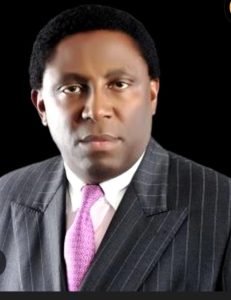
A financial analyst and Chief Executive Officer of CFG Advisory, Mr Tilewa Adebajo has warned that Nigeria’s economy stands at a critical inflection point, weighed down by rising debt, weak policy coordination and declining fiscal space.
He stated this during the annual Nigeria’s economic outlook for the current year organized by the Finance Correspondents Association of Nigeria (FICAN) 2026 Economic Outlook in Lagos.
The annual economic outlook is the association’s flagship program where economic and finance experts are engaged to examine Nigeria’s economic prospect vis-a-vis the declared statutory budget for the year is x-rayed.
Speaking on the theme: Economy at inflection point: Reform fatigue quagmire to sustainable growth,” Adebajo argued that the country’s current fiscal model is structurally flawed and unsustainable, as a significant portion of government revenue is consumed by debt servicing. He noted that Nigeria now spends between 60 and 65 per cent of its revenues servicing debt, leaving little room for productive investment.
“What income are you really making if most of it is used to service debt?” Adebajo queried, stressing that the nation’s debt profile has reached a level where it actively erodes revenue rather than supports growth. He explained that while government enjoys cheaper borrowing costs than the private sector, persistent deficits driven by borrowing cannot continue indefinitely.
He said sustainable recovery requires restructuring the national balance sheet and optimising equity within the capital structure. “When equity levels become too low, you must recapitalise. Otherwise, debt service will continue to crowd out growth,” he said.
On the proposal for asset sales and transfers to professional managers, the CEO maintained that sentimental opposition to privatisation has hindered value creation. He argued that many government-owned assets are underutilised and generate little or no income. “Government does not have the capacity to efficiently run many of these assets. Unlocking their value is not selling the country; it is restoring productivity,” he noted, citing the telecommunications sector as a clear example of how private participation transformed service delivery and economic impact.
He cautioned, however, that asset sales or fresh borrowing without strict oversight would worsen Nigeria’s problems. He stressed that accountability must accompany any capital-raising efforts. “If we raise billions and cannot clearly account for how the funds are used, then we have failed,” he posited, adding that collective pressure is required to ensure transparency and responsible spending.
On growth prospects, Adebajo expressed confidence that Nigeria could exceed current global and multilateral growth projections, potentially achieving growth above five percent. His optimism, he explained, is driven by resilience in the domestic economy, rising non-oil exports, renewed confidence in the oil and gas sector, and increased shipping and export activity.
According to him, containers that once left Nigerian ports empty are now increasingly filled with exports, including solid minerals and other commodities. He also projected relative stability for the naira within a ₦1,400–₦1,500 range, supported by oil sector reforms, improved diaspora remittances and growing investor confidence. Nonetheless, he warned that unchecked fiscal deficits and excessive government borrowing remain the biggest threats to macroeconomic stability.
The economic pundit further emphasised that Nigeria’s core policy failure is weak coordination. While individual institutions may be performing their mandates, he said the absence of deliberate alignment between fiscal, monetary, industrial, trade and investment policies continues to undermine outcomes. “What is missing is coordination, and that coordination must come from the presidency,” he said.
He concluded by calling for deliberate industrial policies, quality public spending with strong multiplier effects, and greater engagement of sub-national governments, which he described as the true engines of economic growth. According to him, without disciplined leadership and coherent policy direction, Nigeria risks prolonging reform fatigue instead of achieving sustainable growth.