
MAN DG says New Industrial Policy’s Success Dependent On Power, Implementation
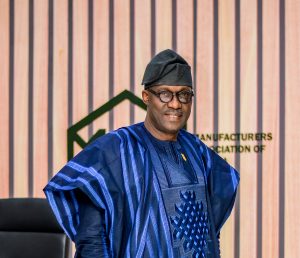
The Director-General of the Manufacturers Association of Nigeria (MAN), Segun Ajayi-Kadir, mni has said that the success of the newly-launched National Industrial Policy (NIP) unveiled last week will be tested by the chronically unstable power sector as well as implementation.
He said energy reform is the single most critical variable in determining whether the government’s target of raising manufacturing’s contribution to the gross domestic product (GDP) to 25 per cent by 2035 would be achieved or become another abandoned industrial aspiration.
The policy, which he described as the most inclusive industrial blueprint Nigeria has produced in over six decades, sets out to lift manufacturing’s GDP contribution from its current nine to 11 per cent, raise sector capacity utilisation from 50 to 75 per cent and position the country as a competitive manufacturing hub under the African Continental Free Trade Area (AfCFTA).
Ajayi-Kadir, however, noted that none of these targets was reachable without a fundamental resolution of the power question.
The policy framework envisions renewable energy adoption, state-level electricity autonomy and private sector-led power solutions within industrial clusters.
MAN DG disclosed that pilot projects combining grid supply with alternative energy sources are already running in select industrial areas as test cases for a nationwide rollout.
Ajayi-Kadir, urged the Central Bank of Nigeria (CBN) beyond energy issue, to further lower interest rates, arguing that high borrowing costs are compounding the burden already imposed by unreliable power supply
“With inflation and naira stabilising, there should be room to reduce interest rates and ease the cost of borrowing for manufacturers,” he said.
He explained that the policy was co-created through months of consultations involving government officials, technocrats, development partners and industry stakeholders, and comes with a detailed implementation roadmap spanning short, medium and long-term goals over 10 years.
According to him, “In 65 years of independence, we have not had a comprehensive industrial policy co-created by the government and the private sector in this manner.
“This one aligns the aspirations of the private sector with the long-term objective of industrialising Nigeria.”
Ajayi-Kadir also called on state governments to develop complementary industrial policies, noting that with at least 37 budgets deployed annually across federal and state levels, all tiers of government must treat industrialisation as a deliberate strategic priority