NITDA, Abia, Partner On Enterprise Architecture Reform to Boost Service Delivery, Others

In alignment with President Bola Ahmed Tinubu’s priority areas of economic reform, digital innovation, and improved governance, the National Information Technology Development Agency (NITDA) has reiterated its commitment to supporting sub-national governments in building integrated, data-driven systems that enhance service delivery and drive sustainable growth.
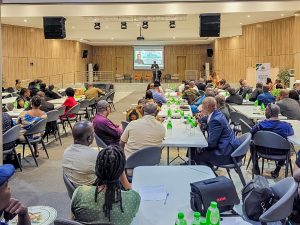
This commitment was reinforced at the Future Enterprise & Data Architecture of Abia State workshop themed “One Citizen, One Identity: Unlocking Data-Driven Governance.”
The high-level engagement brought together policymakers, technocrats, and development partners to chart a pathway toward a unified digital public sector anchored on interoperability and citizen-centric governance.
The workshop, organised by the state’s Ministry of Budget and Planning and declared open by Governor Alex Otti, who was represented by the Deputy Governor, Engr Ikechukwu Emetu, focused on strengthening interoperability among Ministries, Departments, and Agencies (MDAs) to enhance revenue generation and improve service delivery across the state.
Speaking during a panel session titled “Breaking Silos, Building One Government,” the Director General of NITDA, Kashifu Inuwa CCIE, who was represented by the Agency’s Director of Stakeholder Management and Partnership, Dr Aristotle Onumo, emphasised that collaboration remains the cornerstone of successful digital transformation.
“One thing that is very clear is partnership and collaboration. If you want to take advantage of collective intelligence, then partnership is the key. If you want to succeed in building a unified government system, collaboration is the way to go,” he stated.
He stressed that digital transformation is not merely about deploying technology but about transforming people and culture.
According to him, resistance to change and entrenched institutional silos can undermine even the most sophisticated technological frameworks if mindset shifts are not prioritised.
“Digital transformation is as much about people as it is about process and technology. If culture resists change, it can undermine strategy at every level. We must move from control to collaboration, and from isolation to integration,” he added.
Highlighting NITDA’s strategic direction, the DG noted that the Agency’s action plan prioritises digital literacy as a foundational pillar for national development.
He disclosed that NITDA is targeting 70 per cent digital literacy nationwide through structured interventions, including training 30 million Nigerians across formal and informal sectors using digital learning platforms deployed through community and institutional partnerships.
He further revealed that digital education is being integrated into school curricula at primary, secondary, and tertiary levels, while civil servants across the federal public service are undergoing digital capacity development programmes to enhance institutional efficiency and readiness for interoperable governance systems.
On interoperability, Inuwa described it as “not optional but a necessity” for achieving data integrity, efficiency, and innovation in governance.
He explained that NITDA is developing a national interoperability framework and advancing Enterprise Architecture (EA) initiatives across government institutions to ensure seamless data exchange.
“When we talk about interoperability, we mean that data generated in one agency should be accessible and usable by another in a consistent and secure format, without contradiction or confusion. That is how you build one government, not multiple disconnected systems,” he explained.
He added that a robust interoperability framework would not only improve internal government efficiency but also create a platform for innovation, enabling startups and young innovators to build solutions on structured public datasets.
While commending the state’s leadership for its vision and commission, he said, “If we achieve even 80 per cent of what has been presented here, Abia will not only lead among states, but it will also become a national reference point for digital innovation.”
The workshop concluded with a renewed call for stronger federal–state collaboration, policy alignment, and sustained investment in digital capacity to ensure that the vision of “One Citizen, One Identity” translates into tangible socio-economic impact.
PHOTO NEWS