
AfCFTA Targets $250bn Intra-African Trade, Commends Lagos On Industrial, Digital Transformation
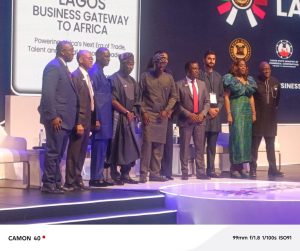
The Secretary-General of the African Continental Free Trade Area (AfCFTA), Wamkele Mene disclosed that the continental trade bloc is on course to achieve an annual intra-African trade volume of $250 billion in the current year.
Mene also commended the Lagos State Government for positioning the city as a leading centre for Africa’s industrialisation and digital innovation.
Mene disclosed while speaking at the ‘Invest Lagos 3.0’ Conference, in Victoria Island, Lagos on Tuesday that the Intra-African trade is projected to reach $250billion in 2026, up from $220 billion recorded in 2025, reflecting growing implementation of the AfCFTA agreement across the continent.
He disclosed that 50 African countries are currently implementing the agreement and that all the protocols underpinning the trade pact have been concluded, creating a stronger foundation for economic integration and regional commerce.
He noted that Africa must accelerate efforts to deepen trade among its countries as global economic challenges continue to limit access to traditional export markets.
“Many African countries have lost market share in key international markets and face increasing trade barriers.
We have to build a strong domestic market within Africa because our future growth lies here on the continent,” he said.
Mene emphasized how external shocks, including the COVID-19 pandemic, the Russia-Ukraine conflict and geopolitical tensions in the Middle East, exposed Africa’s vulnerability to global supply chain disruptions and import dependence.
According to him, strengthening intra-African trade would help the continent become more resilient to future economic shocks.
The AfCFTA secretary-general acknowledged high trade finance costs, inadequate transport infrastructure, logistics bottlenecks and restrictions on the movement of people as some of the major barriers limiting trade growth across Africa.
He also revealed that transporting goods between Lagos and Abidjan, a distance of about 1,080 kilometres, can take up to 17 days due to multiple checkpoints and border-related challenges.
Mene also advocated for wider adoption of visa-free policies and visa-on-arrival arrangements for African business travellers, noting that easier movement of entrepreneurs and investors would significantly boost trade and investment across the continent.
He lauded countries including; Nigeria, Ghana, Benin, Rwanda, Kenya, Togo and Congo-Brazzaville for taking steps towards easing travel restrictions for Africans.
Commenting on the digital economy, Mene described Lagos as the continent’s leading fintech hub and a major driver of innovation.
He asserted that Africa’s digital economy is projected to reach $712 billion by 2035, creating opportunities for entrepreneurs, farmers and businesses through digital payments, business connectivity and emerging technologies.
“The future of Africa’s economy will be driven by digital innovation and industrialisation. We must invest in digital public infrastructure, data centres and payment systems that support seamless business transactions across borders,” he said.
He also underscored the role of the Pan-African Payment and Settlement System in enabling businesses to conduct cross-border transactions using local currencies without relying on the United States dollar.
Speaking on manufacturing, Mene described the sector as central to Africa’s economic transformation, adding that Lagos hosts one of the continent’s largest concentrations of industrialists.
The Secretary-General of AfCFTA urged governments and development finance institutions to improve manufacturers’ access to capital and eliminate trade barriers that hinder the movement of goods across African markets.
He explained that the combination of a rapidly growing digital economy and expanding industrial capacity provides the pathway for accelerating Africa’s economic development and achieving the continent’s trade ambitions.
Mene also applauded Lagos for its strategic role in shaping Africa’s economic future, describing the city as a critical hub for investment, manufacturing, technology and innovation.
He expressed optimism that, with stronger policy reforms, improved infrastructure and deeper regional cooperation, Africa could surpass its current trade targets and unlock greater prosperity for its people.
In his closing remark, the governor of Lagos State, Mr. Babajide Sanwo-Olu commended all the local and international investors, partners, sponsors, volunteer groups and well-wishers of the State who are passionate about the growth and development of Lagos.
Sanwo-Olu noted that the State government is deliberate about its projects across critical sectors in Lagos, saying, those initiatives will define the next phase of Lagos.