
Manufacturers Evaluate Cost of Economic Reforms, Solicits for Stronger Support for Industrial Recovery, Others
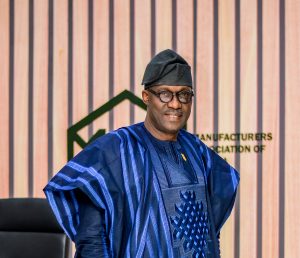
The Manufacturers Association of Nigeria (MAN) has acknowledged the necessity of recent economic reforms and commends the government’s resolve to confront entrenched economic inefficiencies, stressing that manufacturers have also borne a disproportionate share of the adjustment burden arising from the implementation and sequencing of these policies, resulting in rising production expenses, declining capacity utilization and job losses.
MAN Director-General, Segun Ajayi-Kadir, in an assessment of the impact of economic reforms over the past three years, described the period as one of “difficult but consequential economic transition,” marked by major policy measures aimed at correcting structural imbalances and positioning Nigeria for sustainable growth.
The Association, affirmed that the combined effects of fuel subsidy removal, exchange rate liberalization, electricity tariff increases and tight monetary policy significantly altered the operating environment for manufacturers, adding that the removal of fuel subsidy in May 2023 led to a sharp increase in logistics and distribution costs, which rose by more than 300 per cent within weeks.
According to the Association, the situation was compounded by the increase in electricity tariffs for Band A consumers from about ₦68 per kilowatt-hour to between ₦209 and ₦225 per kilowatt-hour, even as power supply remained unreliable due to recurring grid failures, thereby making manufacturers to increasingly relied on alternative energy sources to sustain operations as expenditure on diesel, gas and petrol rose from ₦781.68 billion in 2023 to ₦1.11 trillion in 2024 and further climbed to ₦1.34 trillion in 2025.
It noted that despite the significant tariff increase, electricity supply remained unstable due to persistent grid failures and system disruptions.
The association highlighted that the mounting energy costs weakened industrial competitiveness and contributed to a decline in manufacturing capacity utilization, which fell from 61.3 per cent in the first half of 2025 to 57.7 per cent in the second half, while the rising operational burden also contributed to significant job losses across the sector, with over 18,900 jobs affected during the review period.
MAN disclosed that the liberalization of the foreign exchange market also produced mixed outcomes for manufacturers, adding that while the unification of exchange rate windows sought to improve transparency and eliminate market distortions, the rapid depreciation of the naira sharply increased the cost of imported industrial inputs.
It noted that the exchange rate moved from about ₦463 to the dollar in June 2023 to ₦899 by December 2023 and later to approximately ₦1,535 by December 2024.
It cited the cost of imported raw materials that surged from ₦3.04 trillion in 2023 to ₦6.64 trillion in 2024, representing an increase of about 118 per cent. Manufacturing value-added also declined from $45.2 billion in 2023 to $21.84 billion in 2024.
According to the Association, although the introduction of the Electronic Foreign Exchange Matching System improved market transparency, manufacturers continue to face inadequate access to foreign exchange through official channels, with less than half of industrial demand currently being met.
The association underscored that the tight monetary policy environment further constrained industrial expansion, adding that successive increases in interest rates between 2023 and 2024 made borrowing costs to be excessively high for manufacturers and constrained industrial expansion.
“As of March 2026, prime lending rates averaged 24.4 percent, while maximum lending rates climbed to 33.8 percent in several commercial banks. Under such conditions, long-term industrial investment became increasingly difficult and commercially unattractive. Credit to the manufacturing sector consequently declined from ₦10.88 trillion in February 2024 to ₦6.6 trillion by December 2025.
“The sector also faced uncertainty arising from fluctuating import duty assessments linked directly to exchange rate volatility. Manufacturers that imported essential machinery and raw materials struggled to maintain predictable pricing structures because customs duty obligations changed frequently in line with foreign exchange movements. This development complicated business planning and further increased inflationary pressure on locally manufactured products,” it stated.
It stated further that between 2024 and 2025, the Nigeria Customs Service began phasing out the Fast Track Scheme in favour of the stricter Authorized Economic Operator programme, adding that while the daily fluctuation of the customs exchange rate made corporate planning and pricing extremely difficult for manufacturers importing vital machinery and industrial inputs, the full rollout of the AEO programme in early 2025 provided some operational relief for highly compliant manufacturers through preferential treatment and faster cargo clearance processes at the ports
Despite the challenges, the association acknowledged several policy initiatives that could support industrial recovery and long-term growth, such initiatives as the Naira-for-Crude initiative, it said has helped ease foreign exchange pressures in the downstream petrochemical and plastics value chain, as well as fiscal measures that exempted pharmaceutical raw materials and medical devices from VAT and excise duties.
MAN acknowledged the 2025 Tax Reform Act including withholding tax exemptions, expanded VAT deductibility on fixed assets and services, phased reductions in Companies Income Tax, incentives for research and development, and relief measures for small and medium-sized industries as capable of improving the industrial climate, while the ongoing harmonization of levies across several states also offers hope for reducing the burden of multiple taxation on manufacturers.
The association also acknowledged the implementation of the Nigeria Industrial Policy, adding that if properly implemented and consistently enforced across all government institutions, these initiatives could significantly improve market access for locally manufactured goods, deepen local value addition and stimulate industrial expansion.
It mentioned the launch of the National Single Window platform, describing it as a major opportunity to simplify trade procedures, reduce cargo clearance delays and improve supply chain efficiency for manufacturers.
DG MAN maintained that the sector requires a more coordinated policy environment that deliberately supports production, lowers the cost of doing business and improves industrial competitiveness and urged the government to prioritize targeted interventions that guarantee affordable access to foreign exchange for productive activities, concessionary financing for industrial investment, stable electricity supply and predictable trade policies.
Ajayi-Kadir averred that Nigeria cannot achieve sustainable economic prosperity without a strong manufacturing base, stressing that Nigeria’s long-term economic resilience depends on a strong manufacturing sector capable of creating jobs, boosting local value addition and producing competitively for domestic and export markets.
“The country’s long-term resilience depends on its capacity to produce competitively, create jobs locally and expand industrial value addition. The current reforms can still deliver meaningful industrial transformation if implementation becomes more coordinated, more responsive to productive sectors and more focused on reducing the structural constraints limiting manufacturing performance,” DG MAN emphasized.