
NIP 2025: FG positions small businesses as engine of industrialization
- MAN says NIP will be tested by the chronically unstable power sector as well as implementation
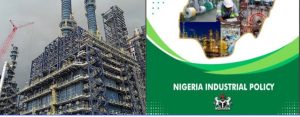
The Federal Government has positioned Micro, Small and Medium Enterprises (MSMEs) as the biggest beneficiaries of the Nigeria Industrial Policy (NIP) 2025, with a package of low-cost financing, preferential government procurement, industrial clusters and digital transformation initiatives aimed at accelerating industrial growth and reducing the country’s dependence on imports.
The policy, unveiled earlier this year, places MSMEs at the centre of Nigeria’s industrialisation strategy, acknowledging their contribution of about 50 per cent to Gross Domestic Product (GDP) and more than 80 per cent of national employment.
To address one of the sector’s biggest constraints – access to finance, the policy provides for sector-specific funding at single-digit interest rates of between five and nine per cent, especially for manufacturers and agro-processors. It also proposes the recapitalisation of the Bank of Industry (BoI) to N3 trillion by 2026 to significantly expand long-term industrial financing.
The policy further seeks to unlock bank lending to small businesses through strengthened credit guarantee schemes, while sustaining intervention programmes such as the N75 billion Federal Government MSME Intervention Fund and the N50 billion Presidential Conditional Grant Scheme.
Beyond finance, NIP introduces measures to lower production costs through the development of industrial clusters where MSMEs can share infrastructure, power, utilities and business services. The policy also provides for the expansion of Technology Business Incubator Centres (TBICs) to support innovation, entrepreneurship and technology adoption, while strengthening the Small and Medium Enterprises Development Agency of Nigeria’s (SMEDAN) business advisory and extension services.
Perhaps the biggest market opportunity for local businesses lies in the policy’s “Nigeria First” initiative, which directs Ministries, Departments and Agencies (MDAs) to prioritise Made-in-Nigeria goods in public procurement. The measure is expected to create a more predictable domestic market for qualified local producers and stimulate capacity expansion across the manufacturing value chain.
The policy also places strong emphasis on technology-driven growth, targeting the onboarding of 25,000 SMEs onto digital trade platforms by 2026 to expand access to e-commerce, digital payments and new markets. At the same time, investments in Technical and Vocational Education and Training (TVET), particularly in automation, mechatronics and digital manufacturing, are expected to improve the availability of skilled manpower for industry.
Analysts believe the success of the policy will depend largely on effective implementation, timely disbursement of funding and sustained improvements in infrastructure, power supply and the ease of doing business.
Meanwhile, Gentechnews reported on March 15, 2026, the Director-General of the Manufacturers Association of Nigeria (MAN), Segun Ajayi-Kadir, mni, in a recent position statement highlighted that the success of the newly-launched National Industrial Policy (NIP) will be tested by the chronically unstable power sector as well as implementation.
He said energy reform is the single most critical variable in determining whether the government’s target of raising manufacturing’s contribution to the gross domestic product (GDP) to 25 per cent by 2035 would be achieved or become another abandoned industrial aspiration.
The policy, which he described as the most inclusive industrial blueprint Nigeria has produced in over six decades, sets out to lift manufacturing’s GDP contribution from its current nine to 11 per cent, raise sector capacity utilisation from 50 to 75 per cent and position the country as a competitive manufacturing hub under the African Continental Free Trade Area (AfCFTA).
Ajayi-Kadir, however, noted that none of these targets was reachable without a fundamental resolution of the power question.
Ajayi-Kadir, urged the Central Bank of Nigeria (CBN) beyond energy issue, to further lower interest rates, arguing that high borrowing costs are compounding the burden already imposed by unreliable power supply
“With inflation and naira stabilising, there should be room to reduce interest rates and ease the cost of borrowing for manufacturers,” he said.
Ajayi-Kadir also called on state governments to develop complementary industrial policies, noting that with at least 37 budgets deployed annually across federal and state levels, all tiers of government must treat industrialisation as a deliberate strategic priority.
In all these, the real test now begins as to whether this framework can deliver measurable industrial outcomes and set a benchmark for Africa’s emerging industrial strategies.
The Manufacturers Association of Nigeria (MAN) views the Nigeria Industrial Policy (NIP) 2025 as an important framework for boosting local production, but has strongly warned that its success is severely threatened by a sharp contraction in credit and existing policy-legal gaps.
MAN and industry analysts have pointed out a disconnect between the policy’s blueprint and its execution, noting a lack of clear capitalization timelines for development banks meant to provide single-digit industrial credit.